Chungking Express

重慶森林
Drama
Hong Kong
Language: Cantonese, Mandarin
Subtitles: English and Czech
Directing: Wong Kar-wai
Starring: Brigitte Lin, Takeshi Kaneshiro, Tony Leung, Faye Wong
Distributor: Block 2 Distribution, Filmasia Presents

TRAILER

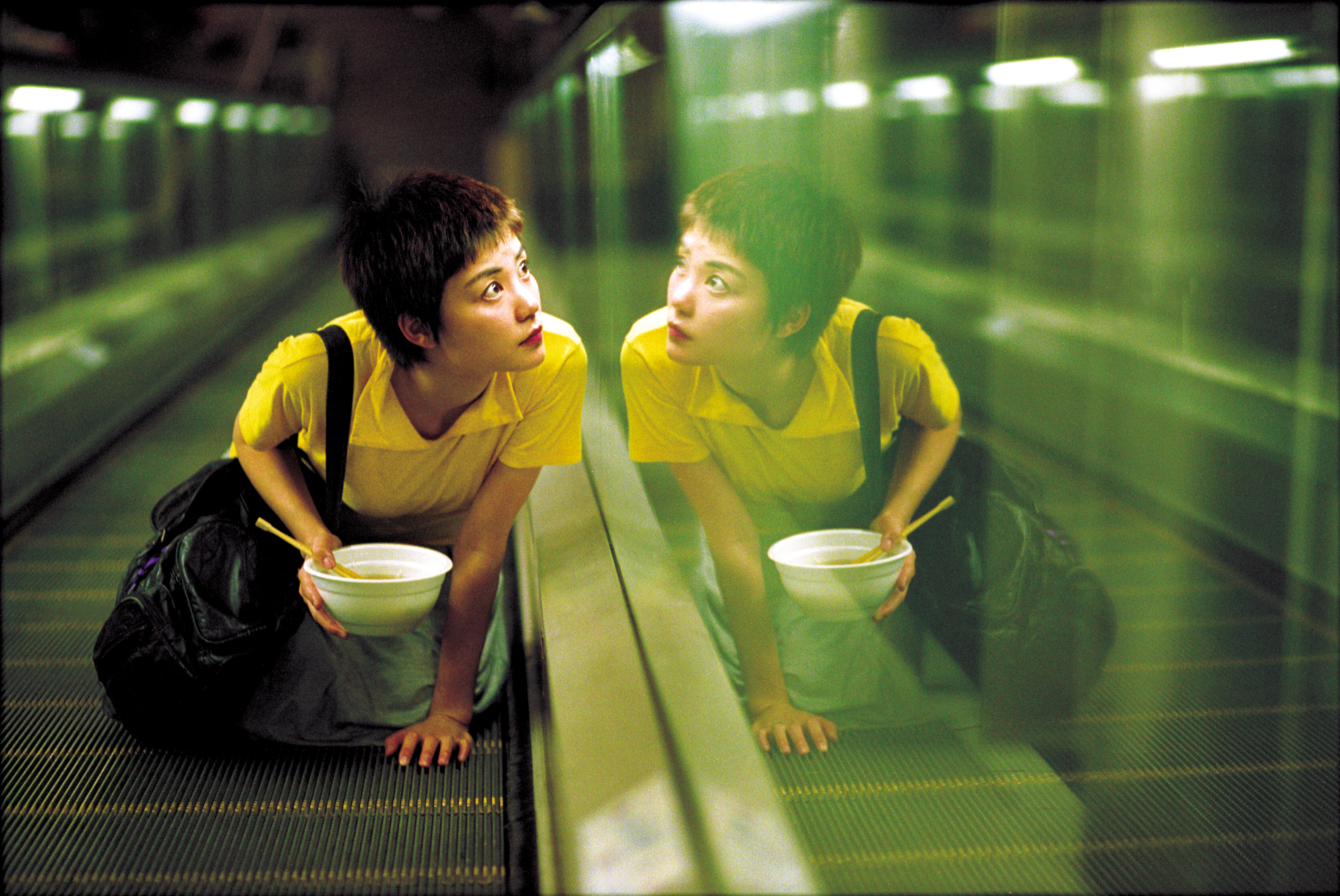
In two stories told in sequence, film magician Wong Kar-wai captures the fleeting magic of memories and Hong Kong’s genius loci. This iconic film was shot during a break from Wong’s arduous work on the historical epic Ashes of Time – to rediscover his love of cinema. The result is an unbridled and heartfelt account of how easy it is to love. And how hard it can be to forget.

The nuanced narrative never lets the viewers experience the exuberant emotions of conventional romance. Instead, Wong constantly challenges the audience (and the characters) to re-evaluate what they see and – perhaps more significantly – what they feel. Cops 223 (Takeshi Kaneshiro) and 663 (Tony Leung Chiu-wai) do not go through a conventional romantic storyline. Wong directly encourages the audience to put their emotional suffering in contrast and offers a narrative puzzle full of parallels and differences. One story relies on the conventions of crime thrillers filled with deadlines, suspense and slow motion takes. The second story involves an almost dreamlike haziness and emphasis on the mundane. In the former, love becomes part of the routine; in the latter, love and routine directly collide.

Wong is unrivalled in combining improvisational freedom, the dynamic Hong Kong style and a clear author’s vision that is simply unmatched. Chungking Express frequently appears at the top of cinephile charts and even Quentin Tarantino has repeatedly expressed his admiration for the film. And not surprisingly, because underneath the stylized aesthetics lies a story that describes our innermost feelings. Or those we may have for a can of pineapple.
Fallen Angels

墮落天使
Neo-noir
Hong Kong
Language: Cantonese, Mandarin
Subtitles: English and Czech
Directing: Wong Kar-wai
Starring: Leon Lai, Michele Reis, Takeshi Kaneshiro, Charlie Yeung, Karen Mok
Distributor: Block 2 Distribution, Filmasia Presents

TRAILER

The greatest postmodernist of Hong Kong cinema. Master of melancholic mood of loneliness and unfulfilled longing. An original stylist combining cinephilia with music video aesthetics. A chronicler of Hong Kong’s last years before the city was handed over to China in 1997. This is Wong Kar-Wai.

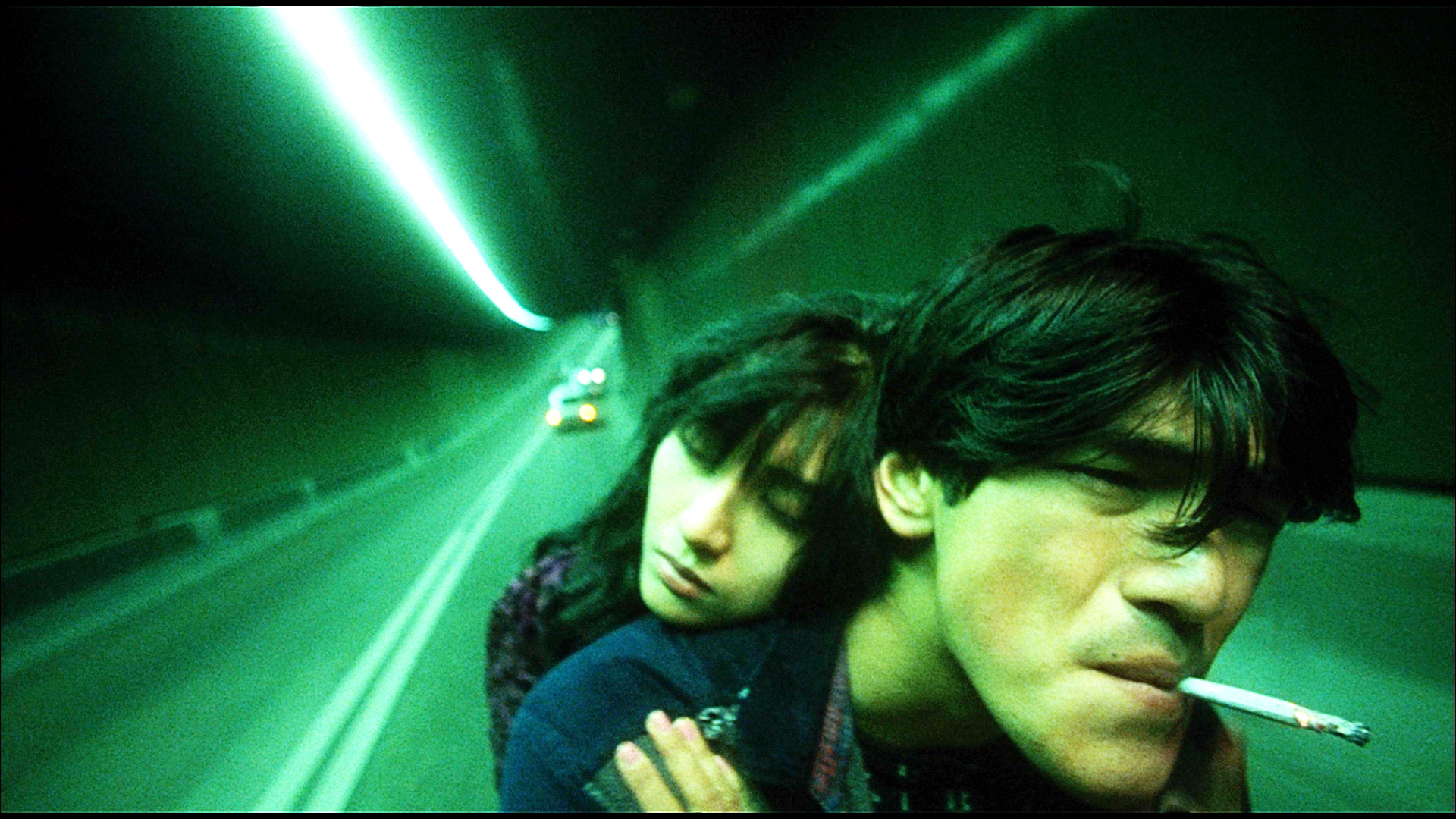
From a filmmaker who was once compared by critics to both Godard and Tarantino, Filmasia presents one of the highlights of his most prolific creative period, the first half of the 1990s. Like many of the director’s other films, Fallen Angels follows several characters who meet each other only rarely, yet we find many parallels between them. A hired killer who likes to have his work set up by someone else, his companion who is obsessed with the killer’s personality even though she has hardly ever seen him, a mute young man who occupies other people’s shops at night, and a girl who longs to face the woman who seduced her ex-boyfriend – these are the protagonists and antagonists of a virtuosically constructed fragmented narrative, where there are far more internal monologues than character conversations. The film is also one of Wong’s most stylistically distinctive works – the camera alternates between colour and black-and-white images, most scenes are shot with a handheld camera using an extremely wide-angle lens that distorts the image, and the trip-hop influenced soundtrack contributes to the surreal atmosphere of the work. Again, Wong is more concerned with evoking a mood than with conventional storytelling. Fallen Angels can be seen as a film about loneliness in the modern city, an audiovisual poem about the melancholic numbness resulting from amorous longing, but also as an impression of Hong Kong itself at the time. After all, Wong himself has said of the film that its main character is the city itself, and that it is a kind of cinematic sibling to his slightly older work Chungking Express.

Happy Together

春光乍洩
Drama
Hong Kong
Language: Cantonese, Spanish, English, Mandarin
Subtitles: English and Czech
Directing: Wong Kar-wai
Starring: Leslie Cheung, Tony Leung, Chang Chen
Distributor: Block 2 Distribution, Filmasia Presents

TRAILER

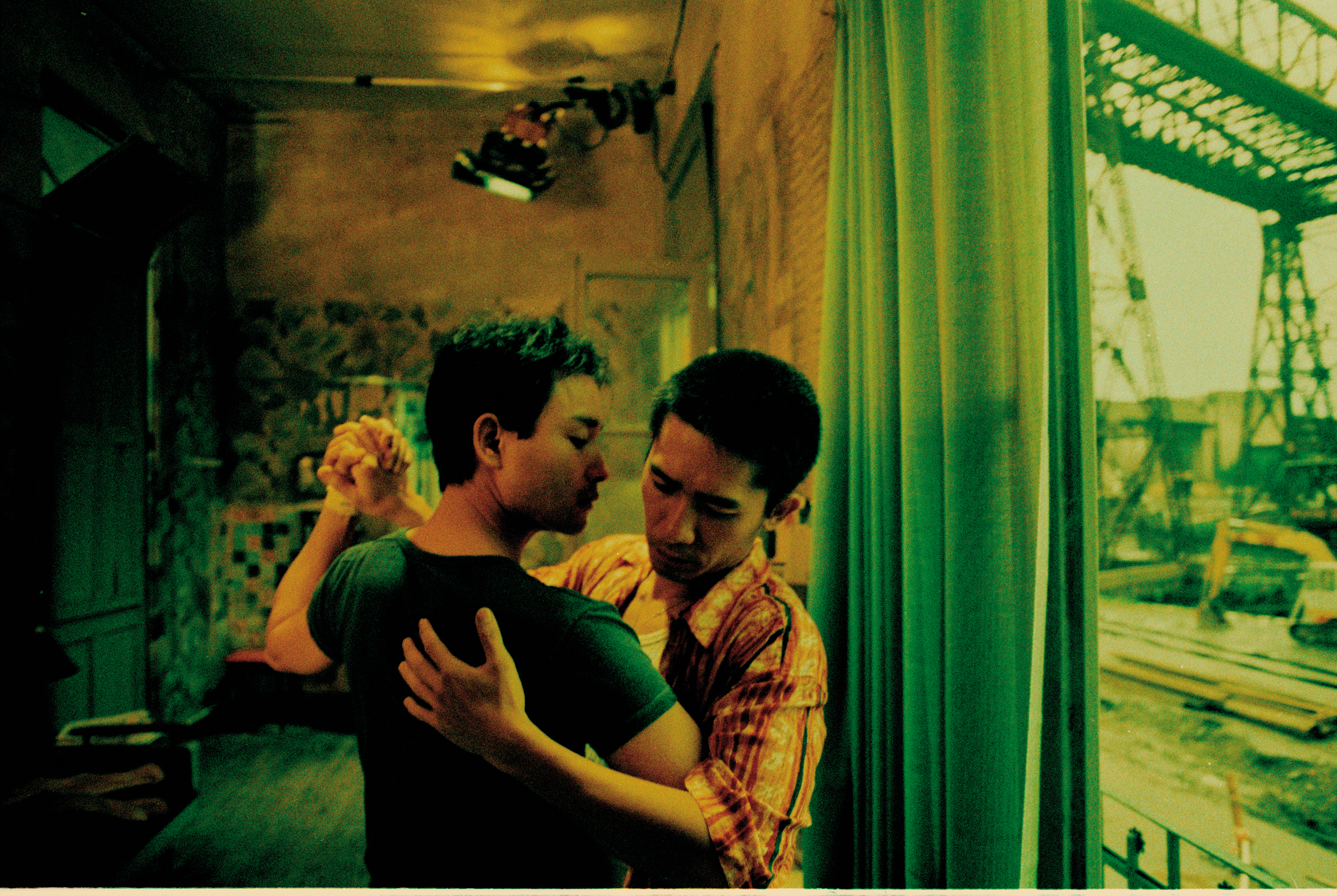
After a series of eclectic portraits of contemporary Hong Kong that blended coolness and melancholy, Hong Kong director Wong Kar-wai shot his famous postmodern queer romance, Happy Together. Ahead of him lay one of his most critically lauded cinematic works, the delicate melodrama about unrequited love, In the Mood for Love. Happy Together, also a highlight of his filmography, forms a bridge between these two styles. Wong Kar-wai left Hong Kong and largely set his portrait of the turbulent love affair between two young men in Argentina, where the Hong Kong couple first set off on a journey together but eventually ended up staying due to a lack of money. The brilliant performances of Hong Kong stars Leslie Cheung and Tony Leung lie at the heart of Wong’s typically loose film form, which relies more on impressions than a rationally constructed narrative. The main plot dissolves into subplots and the story unfolds through impulsive twists and turns, which are dictated by the central couple’s regular, stormy breakups and reconciliations. As in his previous films, Wong is fascinated by the dynamics of love and loneliness, as well as the transience and passage of time. This is reflected in his stylistic peculiarities, such as manipulating the speed of the recording and composing the narrative from different variations on the same situation. These techniques might appear to be a mere mannerism at first, but they are in fact one of the most fundamental ways in which the film communicates with the audience. Wong’s win at Cannes for Best Director, for Happy Together, solidified his reputation as a globally renowned art-house filmmaker. Its theme is what makes it considered one of the key works of the so-called new queer cinema, a movement within independent and art-house film at the time focused on representing queerness.

In the Mood for Love

花樣年華
Drama
Hong Kong, France
Language: Cantonese
Subtitles: English and Czech
Directing: Wong Kar-wai
Starring: Maggie Cheung, Tony Leung
Distributor: Block 2 Distribution, Filmasia Presents

TRAILER

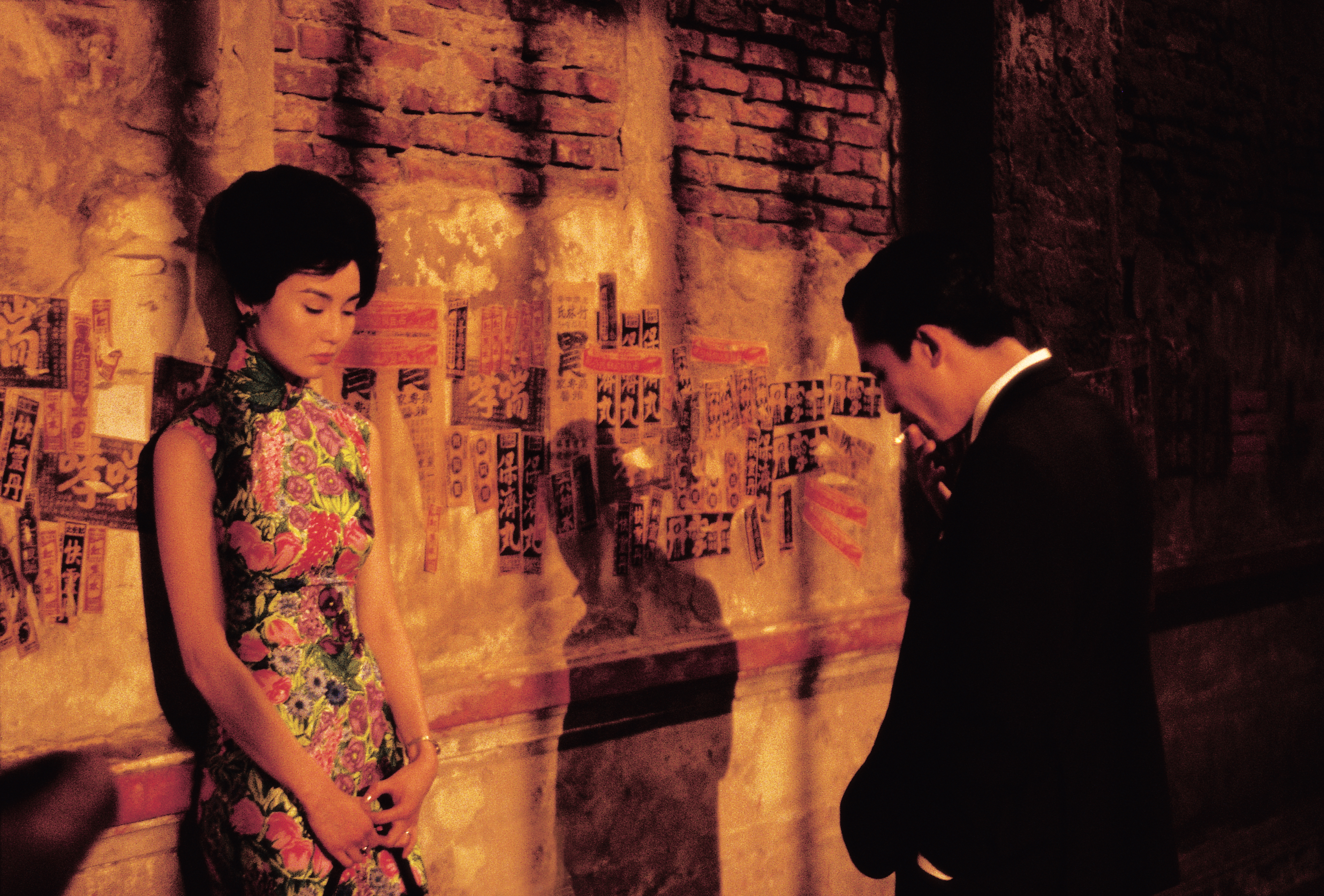
Wong Kar-wai‘s In the Mood for Love is a stylistically outstanding masterpiece – an amalgam of images, music, speed and slowness, gestures, costume designs, colours, space, platonic love and sadness, all under the veil of nostalgia. And it is not just for nostalgia that the effect of this film has only increased over time. The chance to watch a restored copy 25 years after the premiere is simply a “must see”.
In cooperation with three cinematographers, Wong created an epitome of romantic melodrama about a couple drawn to each other by unfortunate circumstances – their spouses are having an affair. Hong Kong stars Maggie Cheung and Tony Leung play Mrs. Chan and Mr. Chow whose lives become entangled when they move to adjacent apartments on the same day (and perhaps sooner). As they later realize their partners’ infidelity, they do not want to act the same. We can see their loneliness, recurring situations, gestures, and musical themes and the mystery of their true, yet unfulfilled, love. Their love must be kept a secret from the world, even more than their spouses’ affair.
The plot takes place in 1960s Hong Kong in extremely stylized film sets and narrow streets that facilitate the concept of closeness and distance – not only between the two main protagonists. Wong clearly alludes to the political landscape in Hong Kong. The city’s transitional status means it is destined to change irreversibly. In 2046 (In the Mood for Love is followed four years later by a sequel entitled 2046), fifty years from the British handover of the island to China, everything may change fundamentally. Given the situation in Hong Kong in recent years, the melancholic song about love and finality sounds all the more powerful.